Astryx, Part 1: The Idea
What would it actually feel like to crew a warship in space? The question behind Astryx, and the one rule that shapes everything in it.
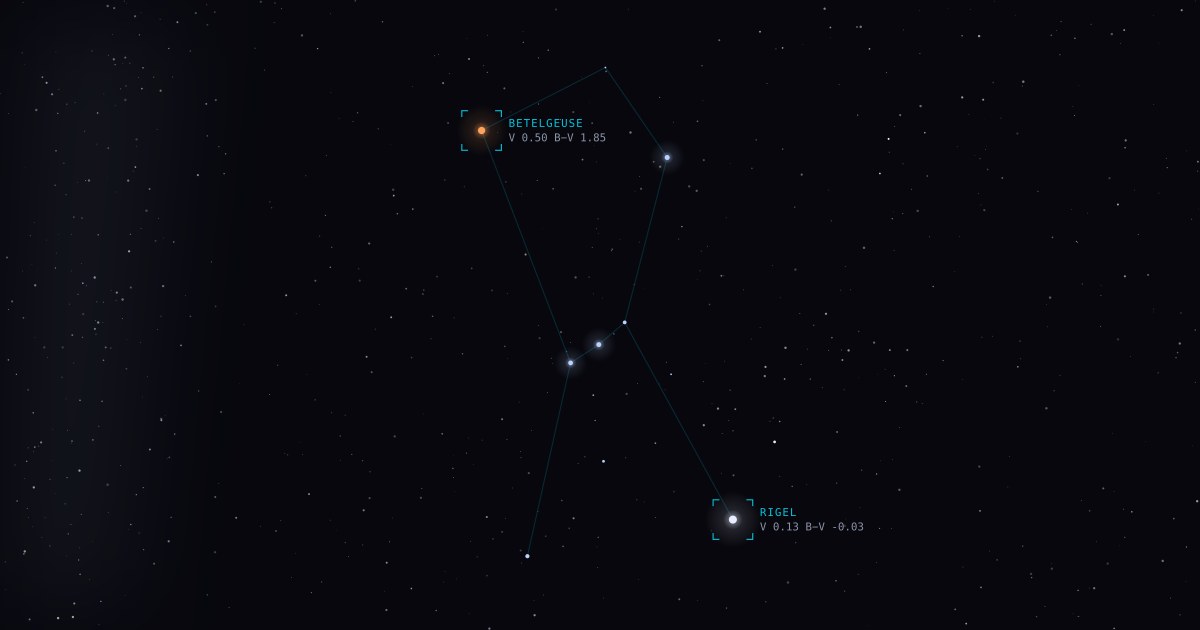
Every project starts with a question. Mine was: what would it actually feel like to crew a warship in space?
I don't mean the movie version, where fighters bank through vacuum like airplanes and lasers light up the dark. I mean the real version: ships millions of kilometers apart, crews hunting for a faint smudge of heat against the stars, every burn of the engine a trade between getting where you need to go and giving yourself away.
That question became Astryx, a virtual reality space combat game I'm building at Nokasa Studios.
Where it came from
The biggest inspiration is a game called VTOL VR. If you haven't played it, you sit in a fighter cockpit and fly by reaching out and physically flipping switches, grabbing the throttle, and pressing buttons with your own hands. It's the closest thing to being a fighter pilot most of us will ever get.
I wanted that feeling, but for a spacecraft, and with two big changes:
- Far more controls. A real spacecraft has reactors, radiators, life support, sensors and weapons, and I want the combat information center to reflect that.
- You can get up and walk around. In most cockpit games you're strapped to the seat for good. In Astryx, the ship is a place. You can stand, walk the bridge, move between compartments, and engage in spacewalks.
The rule that shapes everything
Astryx has one guiding principle: every mechanic should come from real physics, while also still being a game.
Here's what that means in practice. In most space games, a "stealth mode" is a button that makes you invisible. In Astryx, stealth comes from heat. Your ship is warm, space is mostly cold, and sensors look for that difference. Want to hide? Pull in your radiators and run cool, but your reactor can only take that for so long. You may also choose to point the leading edge of the radiators at your enemy, but you need to track them first.
Identifying an enemy. There's no floating label over their ship. You scan areas using an instrument called an Infrared Interferometer at their general direction. If your graphs can pickup a spike of IR where there is supposed to be none, you can begin locking that track. Then utilizing another instrument called a spectrometer, and slaving it to the Interferometer track, you can then pickup their engine exhaust and read the light it gives off. Different fuels burn with different chemical fingerprints on another graph, learning to control and understand these sensors takes time and build a useful ingame skill.
The stars in the sky are real too, pulled from real astronomical catalogues like Gaia DR3 and Hipparcos, and the planets sit where they actually are for the game's date. Eventually a star tracker will let a ship work out its own position and orientation just by matching the stars it sees against that catalogue, the way real spacecraft navigate. The stars will also carry near-real spectra, which cuts both ways: point the interferometer at the sun, or the spectrometer at a target with a bright star behind it, and it should genuinely wreck your reading, the same way it would with a real instrument.
Built for a crew
The part I'm very excited about is multi-crew VR. As far as I know, nothing else really does it. One person can fly a ship alone, with stations running on automation, but automation is slower than a person. Bring friends, and each one takes a real role: someone on sensors, someone on weapons, someone working to fix a blown pipe on the nuclear reactor, and a captain coordinating it all. It should feel like being part of a crew rather than a squad of solo pilots.
Where things stand
I started building in July 2026, in the Unity game engine. The approach is foundations first: get the sky, the planets, and the physics right before anything flashy. Weapons, Multiplayer, and a lot of other big ideas are deliberately on hold until the core feels good.
In the next posts I'll walk through what's been built so far, starting with the night sky.
If you have thoughts, questions, or just want to follow along, I'd love to hear from you. This is a long road, and it's a lot more fun with company.